Common Sense - can it be the first step to assisting those experiencing homelessness?
Using simple common sense is the most important tool that Marianne VanBuskirk can use to ensure that City Council remains practical, fiscally responsible, and directly attuned to the everyday realities of Shuswap residents. While complex policies and provincial mandates are part of the job, a common-sense approach prevents Council from losing sight of the big picture. For a distinct community like Salmon Arm, Marianne knows that common sense means evaluating every policy not just on paper, but by how it impacts the daily lives, wallets, and livelihoods of the people who live here.
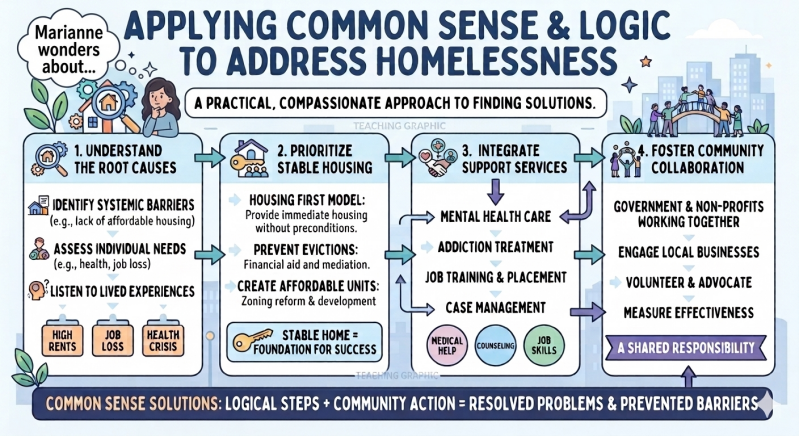
One of the most contentious issues that all communities are facing is trying to solve the homelessness crisis. Since homelessness is such a complex challenge driven by economic, systemic, and health factors, a common-sense approach can assist with a strategy that works. Marianne VanBuskirk believes that the most logical and cost-effective way to reduce homelessness is to prevent people from losing their homes in the first place. Every individual's story is unique, so we need to listen to these stories. We can do that by making the effort to talking to individuals or groups who are in the midst of experiencing homelessness. With this knowledge, we can focus on some strategies that could address situations such as transition planning (ensuring that folks who are leaving public institutions such as hospitals, foster care, or treatment centres are not just discharged onto streets.) Another approach to preventing eviction in the first place is by providing short-term emergency financial assistance or grants to help families who are experiencing sudden job loss or medical emergencies. For example, we can appeal to the Province for grants or financial assistance for those suffering from hardship due to tenant-landlord issues or family counselling needs before issues result in displacement.
By recognizing that a citizen's lack of shelter might be compounded by behavioural health issues, substance use, or severe trauma, we can assist by engaging social services to provide wrap-around supports to individuals. Additionally, are we keeping an updated registry of homeless individuals in our community? Such a registry could help us with tracking the sorts of needs that folks require, or the specific barriers which they are facing. This is a fundamental part of common-sense research resulting in good conversations about how to engage in problem-solving strategies to address social issues such as homelessness.
Marianne looks forward to hearing from others - citizens, community groups, healthcare centres, housing advocates, and those experiencing homelessness - certainly there are good ideas out there to help inform Council.